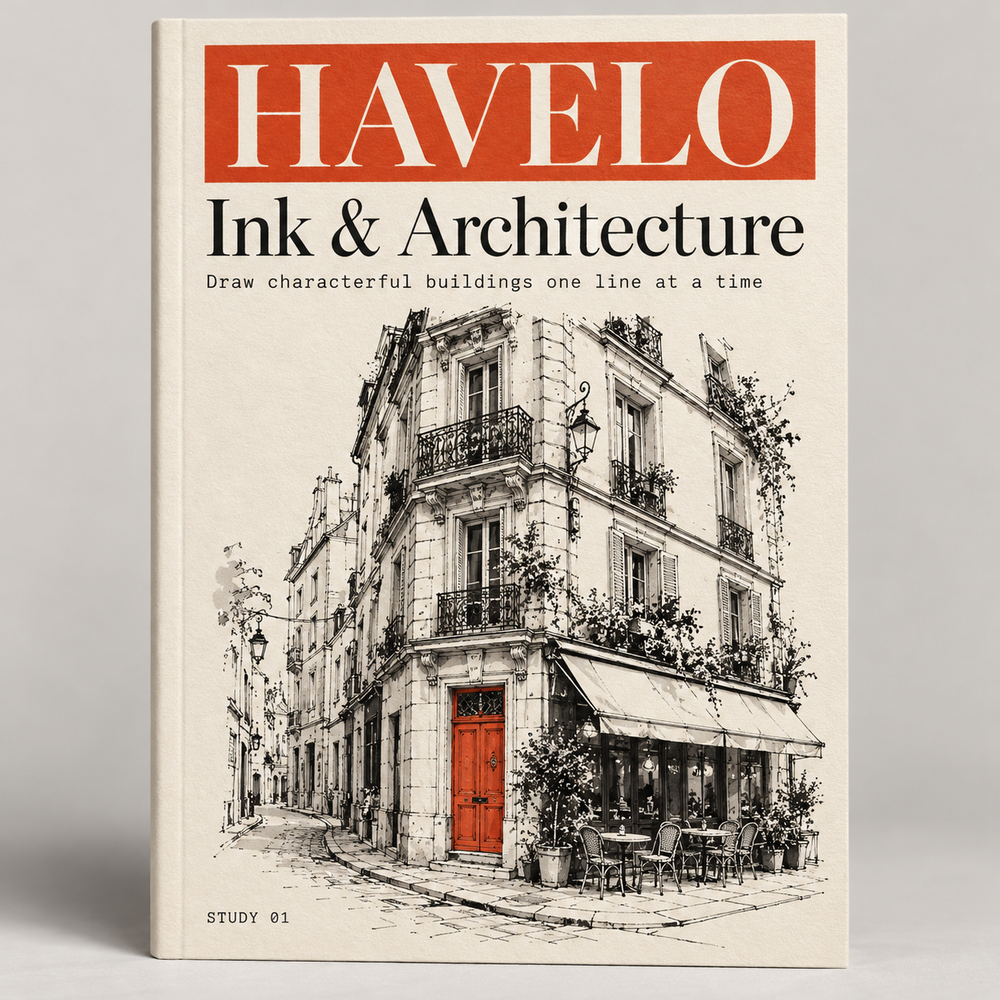
Ink & Architecture — cover design preview.
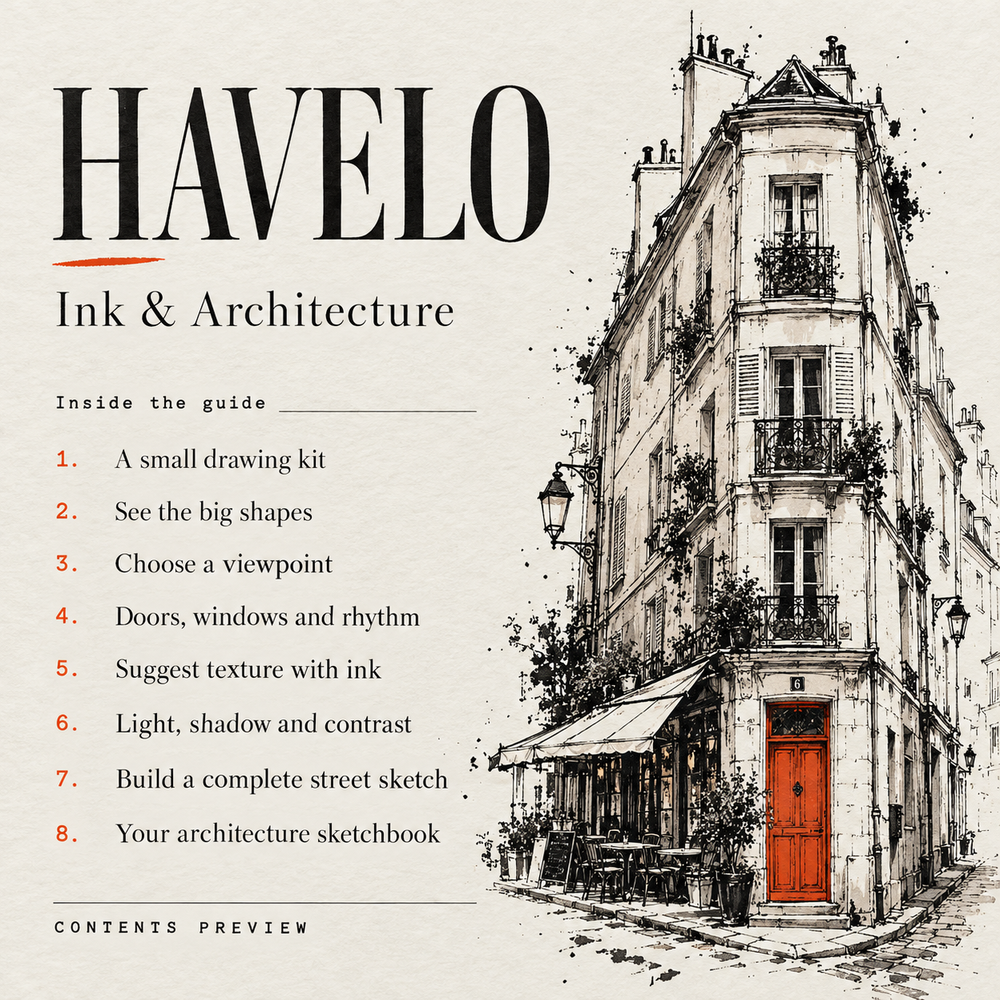
Ink & Architecture — contents design preview. Full text transcript provided alongside.
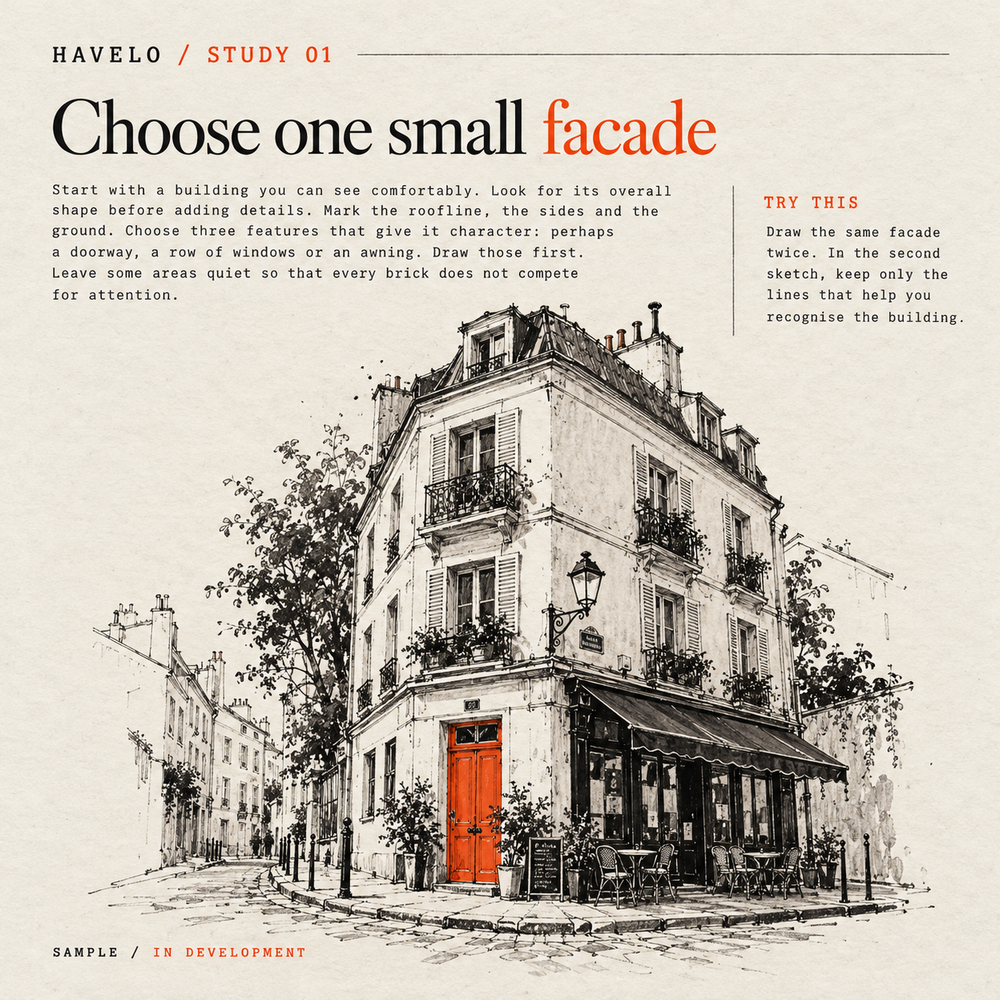
Ink & Architecture — sample page design preview. Full text transcript provided alongside.

Design previews of a planned digital edition. The drawings are concept imagery for the look of the guides, not documented student results or a real instructor’s artwork.

In development

Ink & Architecture

Draw characterful buildings one line at a time

£16.99 Proposed price Study 01 of three
  • SubjectBuildings and streets
  • FormatDigital PDF; no physical book or materials.
  • Target length80 pages. A development specification, not file metadata.
  • You will needPaper or a sketchbook and a drawing pen. Nothing else is required to begin, and any additional materials will be listed in the completed guide.

Explore characterful buildings through ink, from the first large shapes to the details that make a street worth drawing.

Guide in development. This page shows the planned chapters and an original sample; the complete PDF is not available yet and no delivery is promised until it is.

About this guide

Buildings and streets.

A doorway, a row of windows, the turn of a roofline: buildings offer small discoveries when you take time to look. Ink & Architecture is designed to help you turn those observations into expressive sketches.

The planned guide begins with a compact kit and a simple way to approach a facade. You will explore viewpoints, repeated shapes, selective detail and the contrast between light and dark. The emphasis is on choosing what matters to your drawing rather than recording every brick.

Practice prompts invite you to revisit the same subject, simplify busy scenes and build a complete street sketch at your own pace. A dedicated notebook section gives you space to record the ideas you want to try again.

This is an approachable creative guide for adults beginning or returning to observational drawing. It is intended to encourage a personal sketching practice, without requiring architectural training or a polished style before you start.

Planned benefits

What you will explore

  • Break a building into manageable shapes.
  • Choose details that give a facade character.
  • Explore line, texture and shadow.
  • Develop a collection of personal street sketches.

Who it is for

Beginners and returners

Beginners and returning sketchers interested in buildings, streets and urban details.

Scope

What is not promised

No mastery in a fixed number of days, no guaranteed style and no therapeutic claims. These are independent creative concepts rather than a validated teaching method, and the sample exercises are original short studies written for this preview.

Planned contents

Eight chapters.

  • 01A small drawing kitp. 6
  • 02See the big shapesp. 14
  • 03Choose a viewpointp. 24
  • 04Doors, windows and rhythmp. 34
  • 05Suggest texture with inkp. 44
  • 06Light, shadow and contrastp. 54
  • 07Build a complete street sketchp. 64
  • 08Your architecture sketchbookp. 76

Planned chapters and pagination for a guide in development: development specifications, not the metadata of a finished PDF. Target length 80 pages; final details will be confirmed with the completed edition.

Sample

One original page.

Havelo / Study 01

Choose one small facade

Start with a building you can see comfortably. Look for its overall shape before adding details. Mark the roofline, the sides and the ground. Choose three features that give it character: perhaps a doorway, a row of windows or an awning. Draw those first. Leave some areas quiet so that every brick does not compete for attention.

Try this

Draw the same facade twice. In the second sketch, keep only the lines that help you recognise the building.

Sample page design. Complete manuscript in development.

The kit

A pen and some paper

Paper or a sketchbook and a drawing pen. Nothing else is required to begin, and any additional materials will be listed in the completed guide. No drawing tools or physical books are included with the guide.

The pace

Repeat rather than finish

The prompts ask you to draw the same subject again, change your viewpoint and compare what you see with what you put on the page. Nothing here asks for a finished picture on the first attempt.

Before launch

What still has to happen

Each manuscript has to be finished and edited, the instructional sequence verified through real practice, the page counts and prices confirmed, and the actual file delivery and seller policies connected.

HAVELO is a collection in development. Book mockups illustrate digital editions; there is no physical shipping, and no drawing tools are included. Images are illustrative concept imagery, not documented student results or a real instructor’s artwork. Sales connect only when the full files and the delivery service exist.