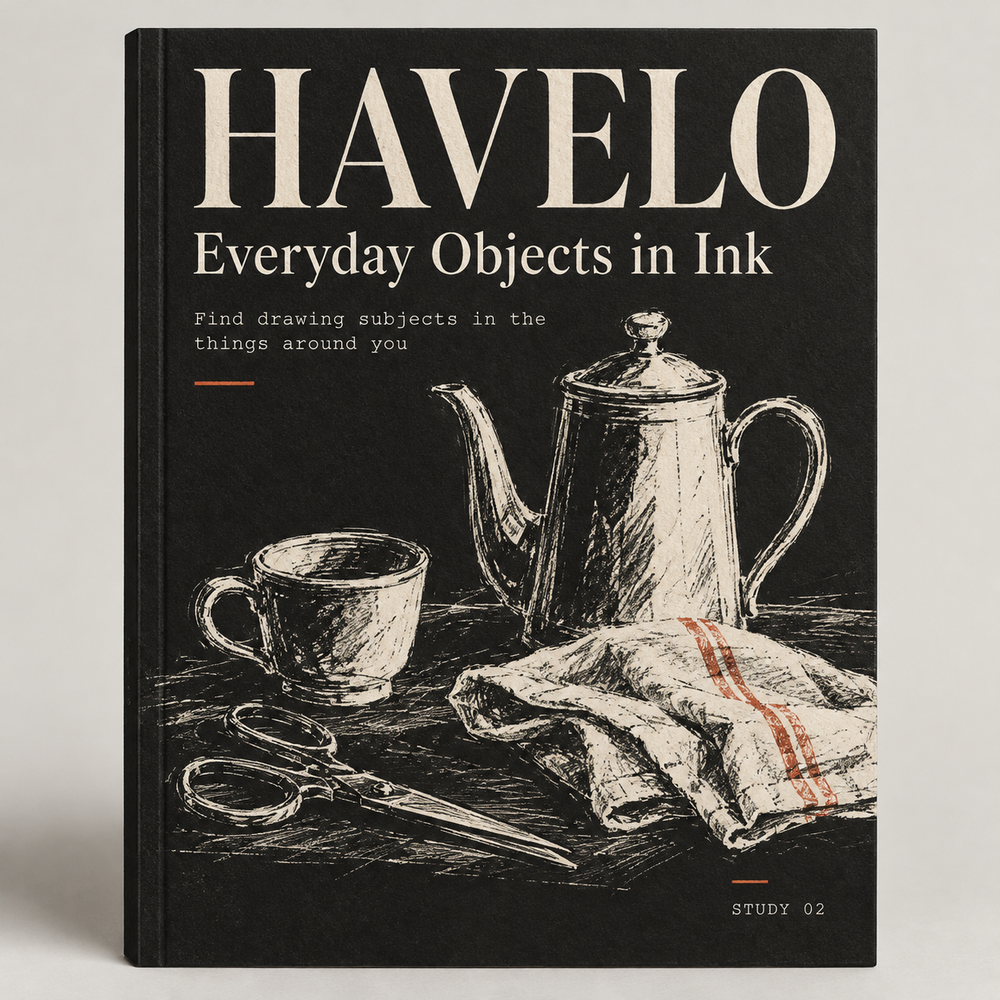
Everyday Objects in Ink — cover design preview.
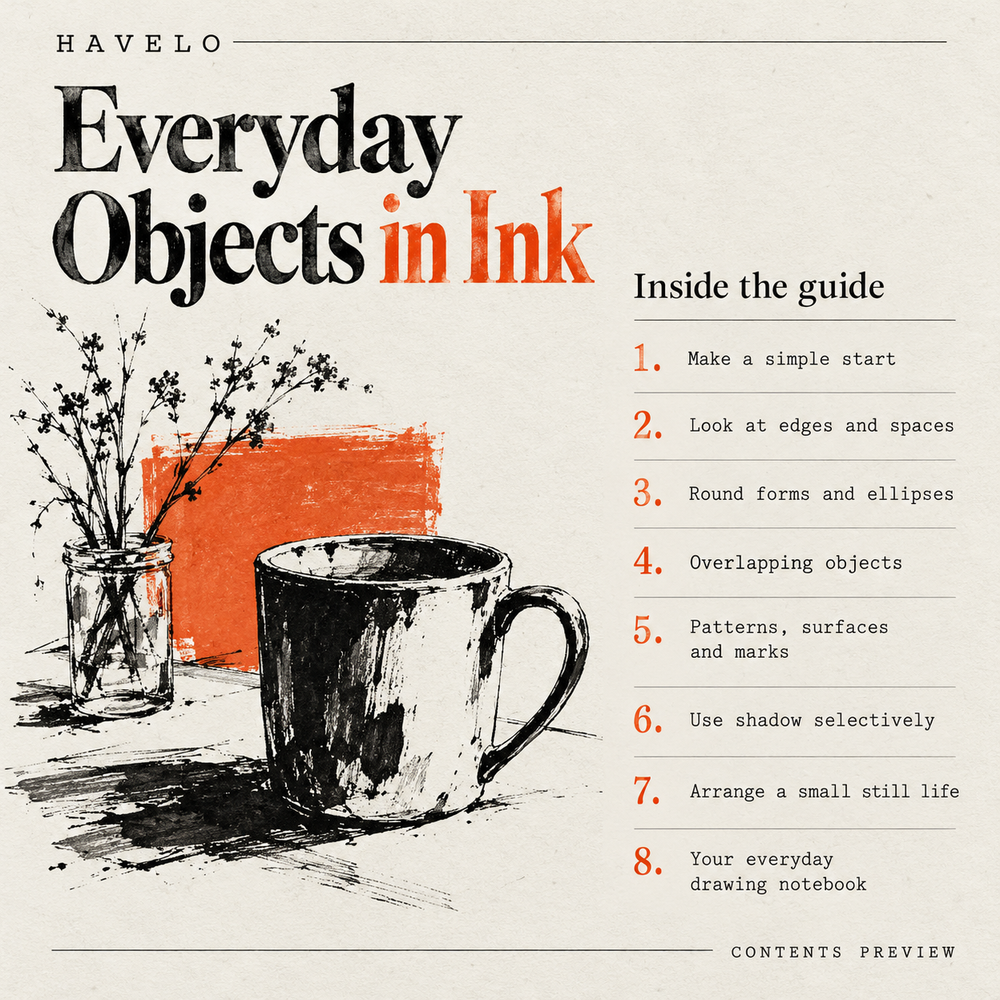
Everyday Objects in Ink — contents design preview. Full text transcript provided alongside.
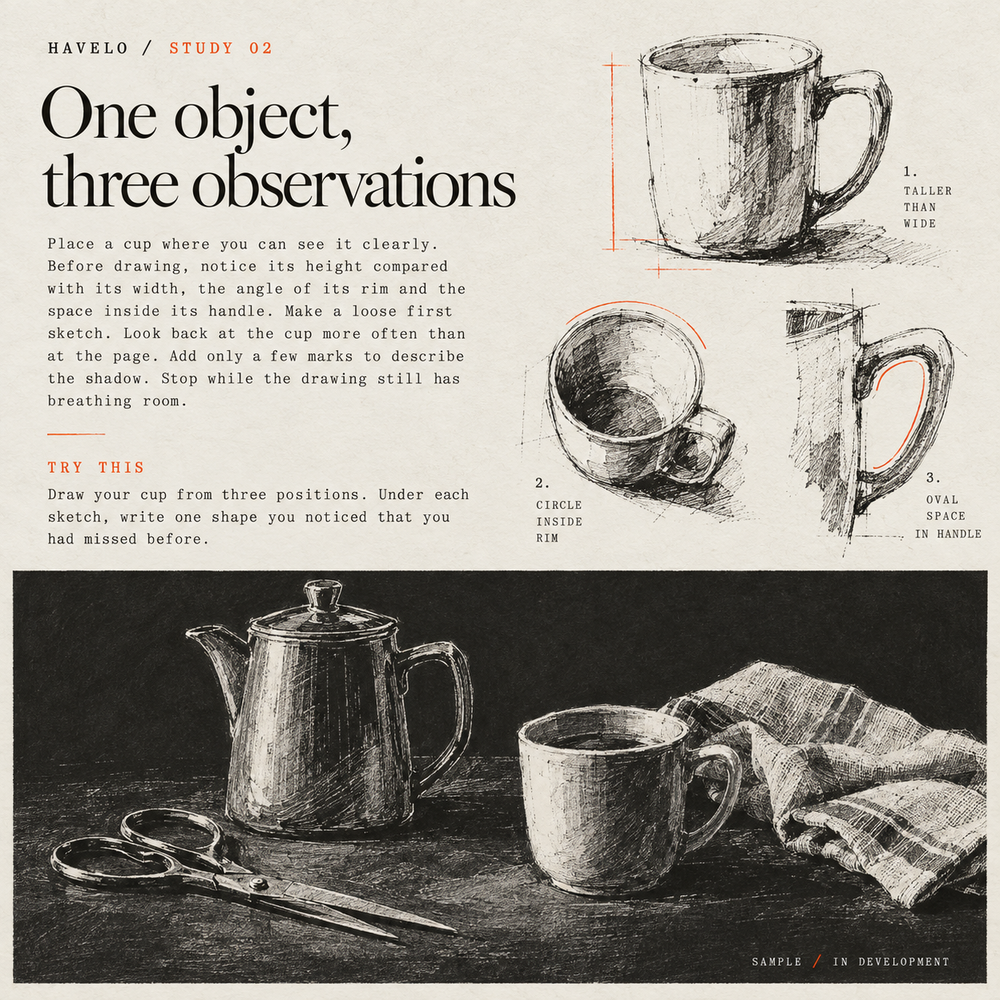
Everyday Objects in Ink — sample page design preview. Full text transcript provided alongside.

Design previews of a planned digital edition. The drawings are concept imagery for the look of the guides, not documented student results or a real instructor’s artwork.

In development

Everyday Objects in Ink

Find drawing subjects in the things around you

£16.99 Proposed price Study 02 of three
  • SubjectObjects within reach
  • FormatDigital PDF; no physical book or materials.
  • Target length84 pages. A development specification, not file metadata.
  • You will needPaper or a sketchbook and a drawing pen. Nothing else is required to begin, and any additional materials will be listed in the completed guide.

Turn cups, tools and familiar household objects into drawing subjects, with practical prompts for looking closely and making expressive marks.

Guide in development. This page shows the planned chapters and an original sample; the complete PDF is not available yet and no delivery is promised until it is.

About this guide

Objects within reach.

You do not need an unusual subject to begin a drawing. Everyday Objects in Ink starts with the things already within reach: a cup on the table, a pair of scissors or a folded piece of cloth.

The planned guide explores edges, spaces, rounded forms and overlapping objects through small studies. It invites you to notice proportions before adding detail and to make deliberate choices about texture and shadow.

You can work with one object or arrange a modest still life, repeating subjects from different angles to discover something new. The prompts are designed to fit a simple drawing setup rather than a fully equipped studio.

A personal notebook section helps you collect useful observations and subjects you would like to revisit. This guide suits adults who want a practical starting point for observational drawing and a reason to open their sketchbook more often.

Planned benefits

What you will explore

  • Find subjects without leaving home.
  • Practise observation through small studies.
  • Explore rounded forms, overlap and texture.
  • Build a personal library of everyday sketches.

Who it is for

Beginners and returners

New and returning sketchers who enjoy still life and want accessible subjects for practice.

Scope

What is not promised

No mastery in a fixed number of days, no guaranteed style and no therapeutic claims. These are independent creative concepts rather than a validated teaching method, and the sample exercises are original short studies written for this preview.

Planned contents

Eight chapters.

  • 01Make a simple startp. 6
  • 02Look at edges and spacesp. 14
  • 03Round forms and ellipsesp. 24
  • 04Overlapping objectsp. 34
  • 05Patterns, surfaces and marksp. 44
  • 06Use shadow selectivelyp. 54
  • 07Arrange a small still lifep. 64
  • 08Your everyday drawing notebookp. 80

Planned chapters and pagination for a guide in development: development specifications, not the metadata of a finished PDF. Target length 84 pages; final details will be confirmed with the completed edition.

Sample

One original page.

Havelo / Study 02

One object, three observations

Place a cup where you can see it clearly. Before drawing, notice its height compared with its width, the angle of its rim and the space inside its handle. Make a loose first sketch. Look back at the cup more often than at the page. Add only a few marks to describe the shadow. Stop while the drawing still has breathing room.

Try this

Draw your cup from three positions. Under each sketch, write one shape you noticed that you had missed before.

Sample page design. Complete manuscript in development.

The kit

A pen and some paper

Paper or a sketchbook and a drawing pen. Nothing else is required to begin, and any additional materials will be listed in the completed guide. No drawing tools or physical books are included with the guide.

The pace

Repeat rather than finish

The prompts ask you to draw the same subject again, change your viewpoint and compare what you see with what you put on the page. Nothing here asks for a finished picture on the first attempt.

Before launch

What still has to happen

Each manuscript has to be finished and edited, the instructional sequence verified through real practice, the page counts and prices confirmed, and the actual file delivery and seller policies connected.

HAVELO is a collection in development. Book mockups illustrate digital editions; there is no physical shipping, and no drawing tools are included. Images are illustrative concept imagery, not documented student results or a real instructor’s artwork. Sales connect only when the full files and the delivery service exist.